The first two episodes of Star Wars: Maul – Shadow Lord were incredible. The next two are even better.
The newest Star Wars animated series continued this week with episodes 3 and 4, respectively titled “Whispers in the Unknown” and “Pride and Vengeance”. The action and the stakes really pick up this week, so let’s not waste any time diving into it. Beware that full spoilers of these episodes are ahead.
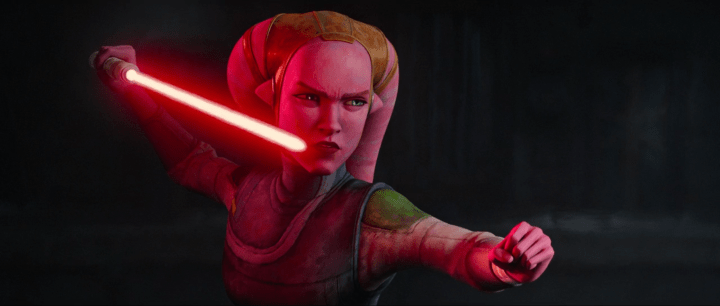
The third episode picks up immediately where the second one ended, as Devon Izara escaped Maul’s custody – just like he wanted. I’m really digging the serialized nature of this show, where it’s all telling one main story that’s broken up across ten episodes (as opposed to an episodic series where each week is its own adventure). This show has no wasted space, and the pacing of it seems perfect so far. They’re giving things enough time to breathe and establish the stakes, but aren’t dragging things along. This is certainly the tightest Star Wars series we’ve seen, and while it wouldn’t work on every show they make it’s really effective here.
So the episode picks up with her escaping, but, again, that’s just what Maul wanted. He’s there to meet her, offering her tea, but she refuses. She obviously wants nothing to do with him, and she is entirely unpersuaded by his previous attempts to turn her toward darkness. That is at least in part because of Maul’s reputation. She knows about him, having presumably been taught as a Jedi youngling about the former Sith apprentice. Sensing this, Maul tells her, “I can tell that you are settled on who you believe I am. Would you like me to be that person? I am capable.” I love that he simply acknowledges, without any emotion, that she isn’t wrong. She knows he is evil and has done much evil, and he doesn’t deny it. She calls him a murderer, and he simply shrugs it off: “Well, we do what we must to survive.” It is most definitely not true that Maul has only killed to survive, but it is true that he sees himself as a survivor. As this series goes on, it’s important to remember that Maul is not the hero. If anything, he’s a lesser evil than some others, but he’s still evil. Yet in this chaotic time of change for the galaxy, Maul is a pragmatist looking to seize whatever power he can – and looking for revenge against all those who have wronged him.
Rather than focusing on him, though, Maul deftly turns it back on Devon. He has done what he must to survive; hasn’t she done the same since the Jedi fell? We saw a tiny evidence of this in last week’s episodes, where she stole some food to feed her and her master, winding up in prison for it. She has done nowhere near what Maul has, but his point is that she can relate to the need to survive. He presses his point further, though, by telling her that they have a common enemy. Her Jedi Order fell, as did the Republic they served. Maul was cast aside and his family murdered. And the culprit behind both? Palpatine. Maul tells her his fall was, “All by the same enemy who destroyed your order. So tell me again, are we nothing alike?” In this way, they are indeed alike. Maul realizes that Palpatine played both sides during the Clone Wars, so that he and the Jedi actually share a common enemy. He wants Devon’s help to get revenge, and this seems to be the most compelling way to try to get it. Turning the Empire into a common enemy does present an opportunity. Maul almost had Ahsoka Tano’s help to fight Sidious, a common foe. Now, he’s trying to get Devon’s help.
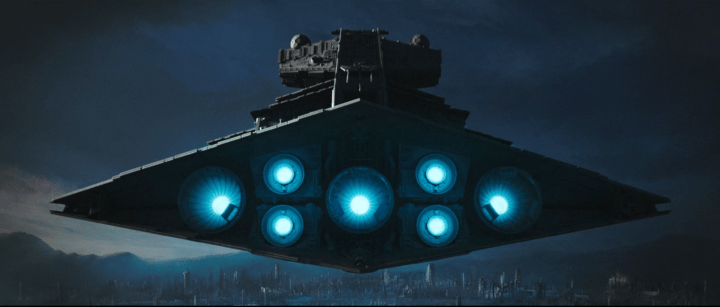
So allow me to speculate a bit here. At the end of the fourth episode the Empire arrives, and surely the Inquisitors along with them. The Jedi and Maul will both have to fight to survive. If the Inquisitors manage to kill Master Eeko-Dio Daki, who is already injured by the time of their arrival, that could be enough of a push for Devon to take Maul up on his offer – not because she just wants to embrace the dark side, but because she and Maul have a common opponent in the Empire, and she now has a lust for revenge (just like Maul). This could all be playing into Maul’s hands.
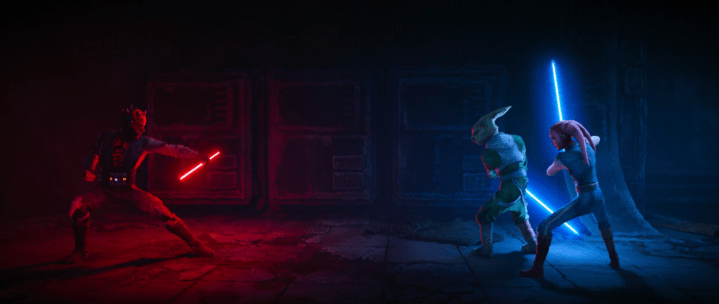
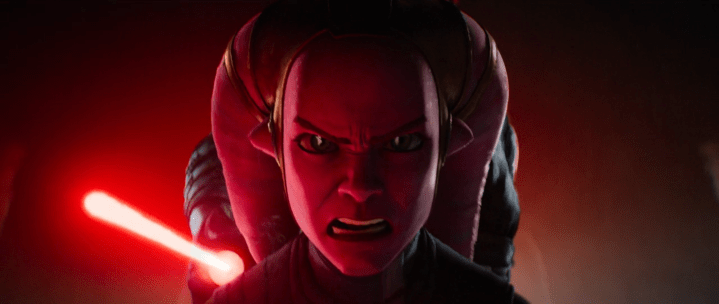
But that’s all for next week. In these episodes, Devon wants nothing to do with Maul’s offer and draws his lightsaber, trying to escape. He haunts and taunts her as she tries to leave, then duels her. He spars with her, keeping one arm behind his back, egging her on toward the darkness. When, at last, she taps into her anger and unleashes a raging scream, Maul smiles and lets her go. She has taken a step on the dark path, exactly as he wanted.
Yet despite all that, she is still a Jedi at heart. She reunites with Master Daki, who wants to flee the planet at once. Devon, though, wants to fight. Not because she wants vengeance, as Daki fears, but because she’s a Jedi – a guardian of justice. As she says, there are good people on Janix, and the Jedi can’t just leave Maul behind to terrorize them. That wouldn’t be the Jedi way. They can stop him, and they must. I like that even after all of Maul’s temptations, we see Devon holding to an idealized version of what the Jedi were meant to be. She was raised to be a guardian of peace, and even though the galaxy has changed, she still feels the responsibility to do so. It’s admirable, but is it wise? That question remains unanswered, but her master does tell her: “We are no longer the defenders of justice in the eyes of the galaxy.”
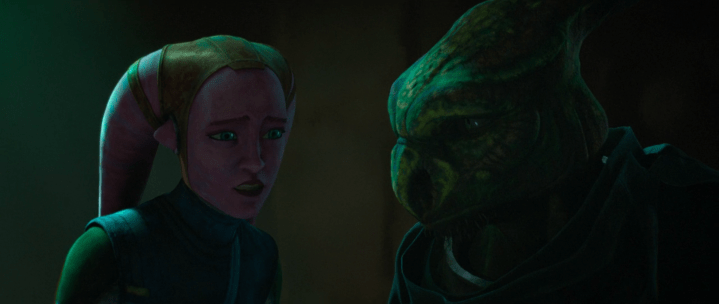
This is an important note, and I’m glad that we’re getting to see the Jedi wrestling with their changing place in a changing galaxy. They once were thought to uphold justice, but public sentiment has swayed to where they’re now thought to subvert justice. They’re now viewed as a terrorist group to be eliminated, not as the one to turn to for help. So for the Jedi, this drastic change in public opinion has created a nearly impossible quandary: either stay true to the Jedi ideals and risk death, or suppress those ideals in order to survive. Maul acknowledged he did what he must to survive. Will the Jedi? More importantly, should the Jedi? These are not questions with easy answers.
Yet despite the reputation of the Jedi in the Imperial era, there are still plenty of people who remember the Jedi far differently. This comes up in a conversation between Captain Lawson and Two-Boots. The droid wants to follow orders and call the Empire, like they’re supposed to, but Lawson orders otherwise. He doesn’t want the Empire there, knowing that once they come they’ll never leave. That’s the same thing we saw happen in Andor, most notably with the Pre-Mox authorities. Lawson is absolutely right. And, it turns out, his reasons might be personal, too, as we find out his ex-wife works for the Empire. I’m wondering if they split pretty recently, and I’m wondering if part of the reason for their split was idealogical differences about this new regime. Lawson is a good cop, and is right about his concerns. But none of that seems to matter to Two-Boots, who wants to call the Empire anyway. Why? Well, as he tells Lawson, if these events happened in the Republic era they would contact them, and the Jedi would come to help. So, Two-Boots reasons, contacting the Empire will do much the same thing. But the Jedi have fallen, and those that took their place are not the defenders of justice in the galaxy but the perverters of it. I fear Two-Boots will learn that all too soon.
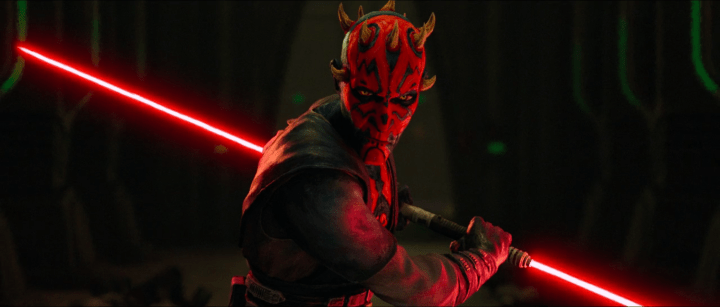
In the void of justice, the galaxy is left with various perspectives. Maul is entirely bent on revenge, and this week it’s the Pykes who bear the brunt of it. Through Vario an meeting is arranged with Pyke leader Marg Krim on Oba Diah. This whole sequence was just fantastic. Upon arriving on the planet Vario spills the beans about Maul being onboard, and after a lightsaber-wielding figure in a cloak kills several Pykes, Vario stuns him. They bring him before Krim, only to discover that this was one of Maul’s henchmen in disguise. At this, the door opens to reveal Maul. He ignites the lightsaber held in Krim’s hand, using the Force to strike the Pyke leader dead. Maul slaughters several others before the Pykes surrender, and he appoints a new leader of the syndicate – one who will report to him.
This sequence was epic, but also an important one in the scope of canon. Maul kneels above Krim’s corpse and shares some details that are of interest to canon nerds like me, revealing that after the Siege of Mandalore he fled to Oba Diah, looking to the Pykes for refuge, but they didn’t welcome him and turned against him. This helps us better understand why he’s so motivated for revenge against Marg Krim. But it’s also a step toward Maul reclaiming power over the syndicates. By the time of Solo: A Star Wars Story, Maul is the shadowy leader of the Crimson Dawn syndicate, ruling from his homeworld of Dathomir. But at the same time, the novel Crimson Climb revealed that Maul also led the five crime syndicates (during the Imperial era, the five were made up of Crimson Dawn, the Pykes, the Hutts, Black Sun, and Crymorah). Somehow, even after the Shadow Collective fell, Maul was able to eventually regain control over these syndicates at least enough to prevent all-out war between them. This feels like a major step in that direction, showing us Maul’s newfound control over the Pykes. They will be led by their own, but they will answer to Maul. One down, four to go.
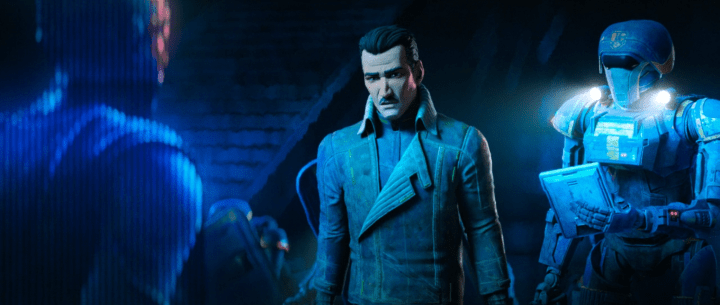
On the one hand, there’s Maul, seizing power through revenge. On the one hand, there’s Brander Lawson. I find the character really compelling, in the Commissioner Gordon type way of a good cop trying to make a difference in a crime-ridden city. His intentions are right, but he’s just trying to hold things together. His relationship with his son is obviously strained, and we see another hint of that. I love that we actually got to see sports in Star Wars, a stadium and a competition of some sorts. That helps make the galaxy feel large, as we don’t often see these kinds of entertainment that the people of the galaxy would indulge in. But Lawson has to leave early for police duty, yet another evidence of the distance between him and his son. I’m curious to see where that storyline goes.
While he’s struggling to hold things together at home with his son, he’s also struggling to hold things together with the force, as Two-Boots keeps wanting to contact the Empire – even going over Lawson’s head to the chief. Some help comes his way in the f
orm of a tip from Master Daki on Maul’s location, and Lawson leads a squad to confront the dangerous foe. Upon arriving, though, Maul greets him via hologram to offer an alternative to fighting. Maul’s offer is that he’ll provide protection, as long as Lawson lets him operate in peace. The idea is that they can both be free of the Empire’s influence, and all that has to happen is Lawson permit Maul to operate on Janix in the shadows as a base of sorts for his machinations. Lawson rejects this, as we knew he would, because he’s a man of integrity. But he also contemplates it, as he must, because this is a tricky situation: will he compromise his morals even if it might be better for the people? In the long run, Imperial occupation will be worse for the people of Janix than even a crime boss like Maul in their midst, but that’s an impossible compromise for Brander Lawson to make. Being willing to go along with evil just because you’re trying to prevent worse evil is Maul’s point of view – after all, he has done what he must to survive. But that’s an evil way of approaching things, which is why Lawson could never agree to it. Yet the brilliance of this story, in such a complicated time of the galaxy’s history with such a compelling pragmatist like Maul as the villain, is that there is no easy answer to these dilemmas.
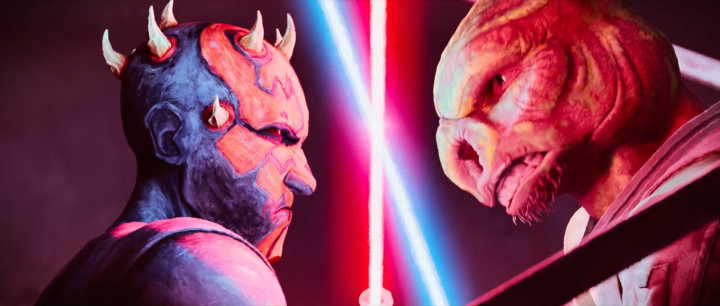
As you can tell, these episodes were terrific, and I’m loving the ideas and ideologies it’s exploring. But, at the risk of burying the lede (I know, way too late), the best part of these episodes in my mind was the fight between Maul and the Jedi – and, specifically, the lead-up to the fight. The fight itself was epic, but the show also takes time to establish the stakes. This isn’t really a battle of strength; this is a battle of philosophy. This isn’t a fight over who the better duelist is, but a fight over ideologies. Maul and Daki debate the right way to approach the galaxy.
For Maul, the way of the Jedi is weak. Rather than rage, it seems he almost pities them. He calls Daki’s offer for Maul to surrender weak, asking “When has that passive ideology ever served you, Jedi? Haven’t you learned your lesson?” In Maul’s mind, the Jedi are survivors, but they don’t live. “With your powers and abilities, you should lead and be respected by all,” Maul tells him. “Not crawl on your hands and knees, begging to survive.” The Jedi claim to only use their power to serve others, but Maul feels this means they are just servants of those who are their inferiors. In conclusion, he says, “It is your unwillingness to use your power that makes you weak.”
Daki, however, sees things from a different point of view. He tells Maul that the Jedi have survived and will still bring him to justice “even in times as dark as these”. Though Maul says they survive but don’t live, Daki says they have different ideas about what it means to live. “Our powers are meant to be used only in the service of others”, he says.
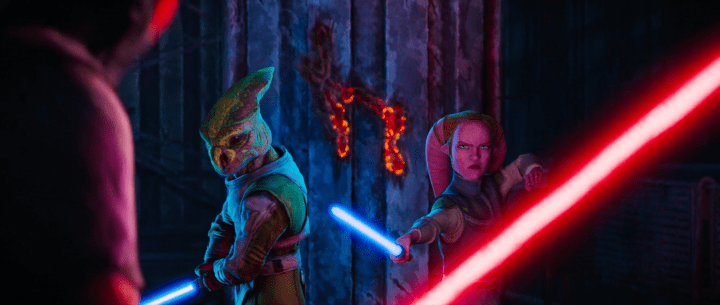
This brings up one of the main ideological differences between Maul (the Sith) and Daki (the Jedi): the Sith believe their power makes them worthy of being served by the galaxy; the Jedi believe their power makes them servants of the galaxy. Maul appreciates the Jedi’s power, but views their selflessness as weakness. Yet what takes more strength: to live for oneself, or to live for others? The desire to be served comes naturally, but the willingness to serve others must be learned. The way of the Jedi is the better, and stronger, way – yet one that not everyone can attain. It reminds me of what Yoda told Luke Skywalker, when the young apprentice asked if the dark side was stronger: “No. Quicker, easier, more seductive.” Contrary to what Maul believes, the dark side is not stronger. It’s just easier and faster. The dark side will never win – not ultimately – because selflessness will always triumph over selfish power. This duel is a duel over these philosophies of thought and how they see the galaxy.
And in this way, this is a sort of “duel of the fates” – a duel for Devon’s fate. She stands by listening to this dialogue, and though she is clearly aligned with the Jedi ways, these episodes have really been an attempt to tempt her toward Maul’s point of view. Will Maul succeed in seducing her toward darkness? Her fate hangs in the balance, as the philosophical differences between the Jedi and Sith are laid bare.
This is exactly what I was hoping for from this series. Lucasfilm Animation has always been really great at diving into the philosophical side of the galaxy, exploring more about the nature of the Jedi and the Force and the dark side. To have this series focus on a dark side user in Maul is an intriguing opportunity full of potential to explore more of this, and I’m thrilled that’s exactly what is happening. These episodes were practically perfect. And next week? With the Empire’s arrival, it seems things will just keep getting more and more intense.