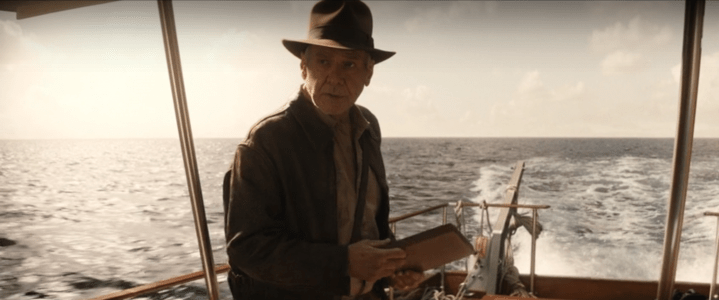
Last year, Harrison Ford returned to the iconic role of Indiana Jones one more time, starring in Indiana Jones and the Dial of Destiny in a film that explored a much older and discouraged hero.
It’s an important kind of story to tell, and one that Lucasfilm has been doing very well at in recent years, but it’s also the kind of story that will easily frustrate and anger fans who were expecting the same version of the familiar character. In the end, the film was met with a very disappointing box office run and very mixed reviews from viewers.
Director James Mangold has all along had a terrific perspective on why they needed to give this kind of perspective on Indy, and he recently re-visited that topic in an interview with Deadline in a wide-ranging discussion to promote his upcoming film, A Complete Unknown. Mangold admitted that he was hurt by the negative reception, but still insisted that this kind of story was necessary – and, in it, I think gives an important lesson for fans of established franchises like Indiana Jones and Star Wars.
“You have a wonderful, brilliant actor who’s in his eighties. So I’m making a movie about this guy in his eighties, but his audience on one other level doesn’t want to confront their hero at that age. And I am like, I’m good with it. We made the movie. But the question is, how would anything have made the audience happy with that, other than having to start over again with a new guy?”
He says that Ford, Steven Spielberg and Kathleen Kennedy came to him at a time when A Complete Unknown was frozen because of Covid and Chalamet was off making the Dune movies for Denis Villeneuve. “And then here come lifelong heroes from my childhood into my life going, ‘We have something for you to work on.’ It was a “joyous experience, but it hurt,” he admits, “in the sense that I really love Harrison and I wanted audiences to love him as he was and to accept that that’s part of what the movie has to say—that things come to an end, that’s part of life.”
It sucks to read about how the reception to the movie hurt him, as it’s a reminder that these are real people behind these projects with real feelings. These are projects made with love, even when fans don’t love it as much (just ask Rian Johnson about this, James Mangold). But I really want to focus in on the comment he made about taking on a story about a hero (and actor) in his eighties: “So I’m making a movie about this guy in his eighties, but his audience on one other level doesn’t want to confront their hero at that age.” That is a really good word from Mangold, and a much-needed reminder.
What he’s saying is that they really couldn’t make the kind of movie that many fans wanted them to make. It was impossible. With Harrison Ford’s age, and his character’s age, they didn’t have the option of telling a story about a younger Indy. They already did that for a bit in the opening prologue with the de-aging technology, but making an entire film with that is complicated on multiple levels. So it really has to be posed to fans: would you rather a movie like this one with Harrison Ford, or a movie about a younger Indy with a brand new actor playing the role? Simply put, most of the critics of this storyline never wrestled with that question, not understanding the logistical limitations of filmmaking.
So it comes down to a segment of the fandom not wanting to have to confront the hero at an older age, and in this it’s a common problem plaguing not just Indiana Jones but movies in general – and Star Wars has certainly experienced this too, especially with Luke Skywalker. What do you do with an older actor and an older character when all that the fans expect is for the exact same guy they watched decades earlier? It’s a nearly impossible situation for a filmmaker to walk into.
The solution, though, appears obvious: tell a story that honors the hero but deals with the real effects of aging, grief, and failure. This isn’t to say that Lucasfilm has done this perfectly with Indy and Luke and others, but the idea is the right one. Because what we need is not just the example of a young person who overcomes all challenges and triumphs and then stays the same for the rest of time; what we need is the example of people who, just like us, deal with growing physical limitations, deal with accumulating grief as the losses of life pile up, and deal with the complications of past failures and mistakes. Part of the appeal of a great hero is that it’s someone unlike us, but similar enough that we can aspire toward it. Everybody could resonate with Luke’s story in the original trilogy, for instance, of a coming-of-age story in finding your place in the world (or galaxy). But do we ever have examples of heroes who grow from there? Lucasfilm is giving them to us, but there’s a segment of fans, as Mangold mentions, who don’t want it.
But, then again, there’s a segment of fans who don’t really want anything. As Mangold said, “the question is, how would anything have made the audience happy with that”? And, as we have seen in the internet age, the answer is that it’s almost impossible to make something that the whole fandom is happy with. Such is the peril of those who take on directing established and beloved franchises. But let’s hope at least a few take Mangold’s words to heart and consider what they’re really wanting from these stories in the first place.
 Star Wars Thoughts