[Editor’s Note: This post contains plot spoilers for Indiana Jones and the Dial of Destiny]
In the days leading up to the global release of Indiana Jones and the Dial of Destiny, Karen Allen attended a premiere showing of the film. Afterward, an online tabloid outlet wrote that she was “unrecognizable”.
In other words, she doesn’t look the same as she did when she first played Marion Ravenwood in Raiders of the Lost Ark – over four decades ago. And there’s a very simple reason for that: people get older. It’s one of the basic realities of life, for those fortunate to live long enough to see old age. Yet just like actors change and get older, so too do characters in the fictional stories that play out on screen.
But there’s a growing sentiment amongst fans that the characters they’ve grown to know and love shouldn’t grow older, or at least shouldn’t change as they do. There’s an expectation that we can turn on the movie, even if it’s set decades after the original, and find the exact same hero. Otherwise, the hero becomes “unrecognizable” for no reason other than the fact that they’ve grown older. As anyone who’s seen plenty of years knows, there are physical pains that come from age but often the far deeper wounds are emotional. There is grief over loss, regret over past mistakes, disillusionment over things that didn’t go as hoped. The question is not if people have them, it’s simply what they are.
There is, of course, a compelling case to be made for leaving heroes much the same way, unaffected by aging, and to keep telling stories with them. It’s a tactic that the James Bond franchise, for instance, has adopted. Or it’s like how The Simpsons keeps the characters at pretty much the same age despite it’s 34-year run. There’s nothing wrong with that kind of approach, nor with fans who prefer it. That’s perfectly fine.
But Lucasfilm in recent years has led the way in a different kind of story. Rather than re-casting their actors to keep the same stories going, they’ve followed a linear story in which the characters grow older. The easy way out would have been to have those characters be largely unaffected by age and unaffected by the events of their lives, but if you dig a little deeper there’s a more compelling story that can play out when allowing these figures to be human. To be plagued with pain and guilt, with grief and disappointment. Lucasfilm has explored this several times in recent years.


For instance:
Luke Skywalker (Mark Hamill) in The Last Jedi – The hero who faced down an Empire and redeemed his father from the darkness when a young man, we meet Luke thirty years later in exile on Ahch-To. He traveled the galaxy learning about the history of the Jedi, then re-built the Jedi Order. But after more than two decades after the powerful Jedi Master, Luke’s star pupil – his nephew, Ben Solo – rebelled against him. Luke blamed himself, and upon seeing the destruction of his temple, ran away. He’s the most powerful Jedi to ever live, but he feels like he’s failed those who came before. He feels like he’s failed his nephew. He feels like he’s failed Leia and Han. He’s a man hampered by guilt, but through the course of the movie he comes to embrace the fact that the past need not have the final word. He learns to embrace and grow from his failures, and to spark hope in a new generation who needs him. Luke returns to the fight, more powerful than ever, having regained hope in the Force, the Jedi, and perhaps most crucially, himself.
Obi-Wan Kenobi (Ewan McGregor) in Obi-Wan Kenobi – The most obvious on-screen tragedy in Star Wars is the fall of Anakin Skywalker, depicted in Revenge of the Sith, as Obi-Wan’s pupil and friend embraces the dark side and destroys the Jedi Order. Naturally, Obi-Wan feels like he failed Anakin – something he admits in that film: “I have failed you, Anakin. I have failed you.” He heads into exile, with the mission of watching over Luke Skywalker yet sinking into the mire of despair. He gives up his old ways, loses faith in the Jedi, and feels the weight of failure. He’s lost everything he knew, and feels partly responsible. Yet through meeting Leia Organa, and facing off against Darth Vader again, Obi-Wan is finally able to let go of the grief that burdens him. He can’t fix what has happened, and he doesn’t need to take all the responsibility for it. There’s a new generation that gives a new hope, and Obi-Wan can be the Jedi he needs to be for them. He doesn’t need to be burdened by the past any longer.
Willow Ufgood (Warwick Davis) in Willow – Moving beyond Star Wars, the recent Willow series picked up on many of the same themes. We meet the hero of the lesser-known cult classic Willow film, Willow Ufgood, decades later – and he’s a far cry from the legendary sorcerer everyone imagines him to be. When the new generation of heroes comes to him needing his help to rescue Prince Arik, he agrees (upon discovering Elora Danan is among them)… but the others are let down by him. He’s cranky, bitter, and a bit of an enigma. He too feels that he’s failed Elora because of past mistakes, but he’s also plagued with the sense that he’s not really that great of a sorcerer after all, not like he always longed to be. Yet in the pursuit of it, while off on some adventure, his wife died and his son left. He feels responsible, and he feels like the legend of Willow doesn’t match reality. But he comes to embrace the future that’s ahead of him, training Elora and saving her at a crucial moment of weakness.
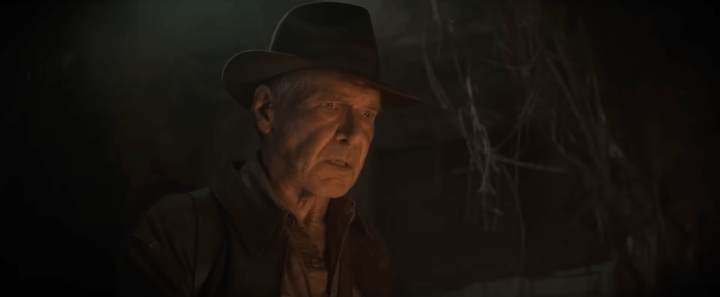
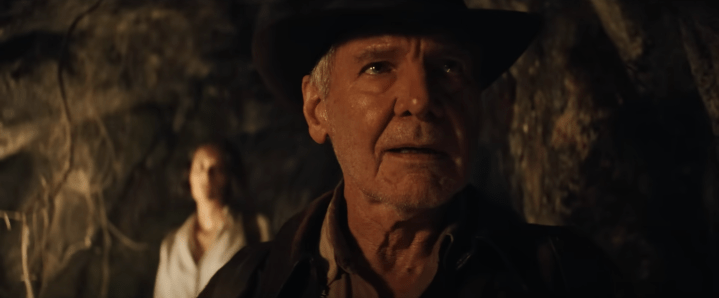
Indiana Jones (Harrison Ford) in Dial of Destiny – After a feel-good ending in Kingdom of the Crystal Skull, with Indy married to Marion and his relationship sparked with their son, Mutt, we meet him in Dial of Destiny in a very different spot. He’s going through a divorce and is in a funk, and we eventually learn why: Mutt enlisted in the military “to piss [Indy] off”, and he was killed in Vietnam. The tragedy overcame both Indy and Marion in grief, and led to the collapse of their marriage. The personal grief changed Jones, and in the climax of Dial of Destiny he wants to stay in the past to avoid the pain of the present. But Helena pleads with him to return, and she forces him to realize that there are people who need him. So as Marion returns at the end of the film, she mentions that she’d heard Indy was back, and the movie took viewers on the journey of seeing the hero return.
Now, one way of looking at this would be to say that the trope has become repetitive since Lucasfilm has repeated it, and that’s fair. But the fact that it’s happening with different actors in different stories with different circumstances keeps it fresh, while leaning into some very important themes – and I think the stories are all the better for it.
It’s hard to see our heroes like this, and that’s one of the chief challenges of franchises that are picking up on nostalgic stories that people watched when they were younger. These were the heroes that we looked up to, that inspired us to be better people, to be brave and courageous in the face of opposition and to come out stronger on the other side. They’re what we aspired to be, which makes it even harder to see them in various states of brokenness and failure. Because if even our heroes aren’t exempt from these pains of life, then it reminds us of the all-too-real ways in which our lives don’t always play out according to our hopes, how we don’t always get everything right, how we deal with the effects of aging, pain, and regret. But it’s here that Lucasfilm allows these heroes to continue to teach us and to show us a better way. See, none of the heroes mentioned above stay where they were at the beginning of the film; they all grow and learn, come to grips with themselves and the past so as to embrace their purpose in the present. If we’re willing to listen, these are stories about the pains of growing old, the grief of loss and the sorrow of failure, and most importantly the importance to keep going. There are people around us that need us, and there’s a purpose in the present no matter the past.
A true hero isn’t one who never makes mistakes and is completely unaffected by the normal rigors of life. A true hero is one who continues to embrace the light even in the midst of whatever comes. And in a culture that celebrates youth above all, and a movie industry that treats heroes as paragons of virtue, Lucasfilm is allowing their iconic heroes to be raw and vulnerable in a way that’s rarely seen. In the process, they’re allowing us to see a side of heroes that is seldom glimpsed but beautifully needed. Yes, people change and grow older. Yes, even the best of people make mistakes. Yes, even the most perfect of heroes experience pain and grief. But even there, when all hope seems lost and life appears bleak and the future looks clouded, to hold to the light and embrace the purpose in the present is a sign of true strength.
“Heeded my words not, did you,” Yoda reminds Luke in The Last Jedi. “Pass on what you have learned. Strength. Mastery. But weakness, folly, failure also. Yes, failure most of all. The greatest teacher, failure is. Luke, we are what they grow beyond. That is the true burden of all masters.”
It’s a great teacher indeed, if we’re willing to listen to the lessons Lucasfilm is giving us.
 Star Wars Thoughts