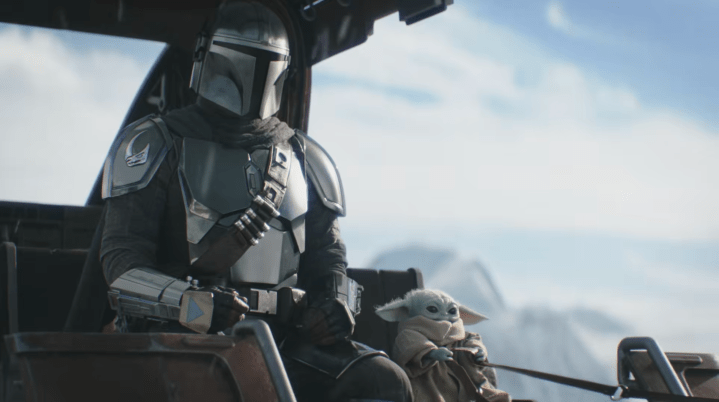
I think it’s time to say it: I’m concerned about The Mandalorian and Grogu.
I hope it does well at the box office, especially since this movie seems pretty important in the efforts to re-launch Star Wars on the big screen. It’s the fact that I do want this movie to be great, and perform well, that has me concerned it might not. Only time will tell, but it seems like there is very little hype for this movie, and the Super Bowl ad – according to some data recently released – seems to have been a big swing and a miss at an attempt to generate hype.
This taps in to a larger conversation about Star Wars that has been lurking mostly under the surface in recent years, but it’s this: the way they promote things just seems really strange. And given the way Jon Favreau and Dave Filoni operate – with extreme levels of secrecy and extreme aversion to letting fans in on much of anything prior to release – I’m worried it could be about to get worse, not better.
The idea with Star Wars has long been that the key to promotion is preserving every measure of secrecy. Trailers have been designed around the already-existing fanbase, showing some exciting moments and intriguing images, giving just enough away to prompt speculation but remaining very light on any kind of plot details. Star Wars trailers have more and more been handled differently than other trailers in the movie industry (with the exception of Marvel), as they’re not intended to tell you what this movie is about so much as show you enough shots to get you hooked at wanting to see more.
That worked wonderfully with the sequel trilogy, which did tremendously well at the box office. People didn’t need to know the plot details; in fact, they preferred not to. The Star Wars brand, returning to the big screen after so long, combined with the return of the original heroes like Luke Skywalker, Han Solo, and Princess Leia was enough to get even casual moviegoers into the seats. The Force Awakens became more than just a movie to see; it became a cultural event. People didn’t need to know what the movie was all about, because they didn’t need to be persuaded to see it. That happened the moment the return of Star Wars was revealed, the moment fans saw Han and Chewie walk back onto the Millennium Falcon in that famous trailer. This kind of approach held well for The Last Jedi and The Rise of Skywalker, not only because of the legacy characters but also because they represented the continuation of the main story and the next step for some new characters.
But the cracks in this approach began to show with Solo: A Star Wars Story. With Rogue One a few years earlier, the franchise had leaned more into the promotion of the movie, riding the wave of The Force Awakens, and everybody going into theaters knew (or at least could have known) what the movie was about. The main story had been made clear, all along: this was a gritty war movie about a rag-tag group of rebels who, against all odds, try to steal the Death Star plans. And, with it being the first non-Skywalker saga film, Lucasfilm seemed to understand the need to market it a bit differently (it followed more closely The Force Awakens‘s promotional schedule than any of the other Disney-era films have). But then came Solo, and the promotion of it was a mess. The tone of the trailers didn’t at all reflect the tone of the movie, and what’s more, nobody really knew what the movie was about, besides a “Han Solo origin story” that didn’t have Harrison Ford. The merits of how good the movie actually was don’t matter here, because people didn’t go see it.
It had become clear that Lucasfilm needed to change with the times in how they promoted their movies – not in giving away every plot detail, but in doing more to convince audiences they should be there. “What is the movie about?” “Why should I go see it?” The Star Wars brand remained strong, but a few things had changed. (1) First, the novelty of new Star Wars had worn off a bit, as it must. There was no way of changing this for Lucasfilm. They just had to adapt. (2) Second, releasing movies in the social media age became a new animal that Lucasfilm hadn’t navigated before. This amplified the discourse and division, giving a louder voice to dissenting opinions that have always lurked since the original trilogy. The reputation of Star Wars became tainted for many. No longer was it a “if it’s Star Wars, I’ll be there no matter what”. It became “if it’s good Star Wars I’ll be there, and I’m not sure if this will be good”. We can debate how fair that is, but it happened. (3) Third, other movie franchises continued to grow, like the Marvel Cinematic Universe, making so that Star Wars was no longer an assumed staple. Unless moviegoers went to lots of movies each year, they’d have to pick and choose which ones to view. And there were other franchises vying for the same audiences Star Wars was. (4) Fourth, the fact of the matter is that, in general, the Skywalker Saga is much easier to sell casual audiences on than other stories. The continuation of a decades-long story with familiar characters and lots of connections is a much more appealing, and exciting, opportunity for the masses than a new standalone story with all new characters and plenty of confusion to how it even fits into the galaxy. Like it or not, the majority of people who go to see Star Wars in theaters aren’t the people who read a website like this, people who keep up with all the details of books and comics. They’re those who know the tale of Luke Skywalker and the fight against the Empire.
All of this meant that Star Wars would have to adapt. They would have to go a bit more on the offensive, trying to convince people why they should come out to theaters to see this next movie. Only, Star Wars stopped going to theaters. After The Rise of Skywalker in December 2019, the next Star Wars movie on the big screen is The Mandalorian and Grogu, in May of 2026. In that time, streaming became the central focus of Star Wars storytelling, with The Mandalorian leading the way. But one of the most difficult, and ambitious, jumps for a studio to make is to successfully transition a character from the small screen to the big screen, something that Marvel is struggling to figure out how to do as well. Lucasfilm cannot just assume that the casual audiences who might usually go to a Star Wars movie in theaters are all familiar and attached to The Mandalorian and Grogu the way they are others characters. This jump is a big deal, and how it does will be a defining moment for Star Wars for years to come.
Yet amidst all of this, here’s what is especially interesting: rather than learning their lesson and changing the way they promote, Lucasfilm has become even more reserved when it comes to these properties. Jon Favreau and Dave Filoni are notorious for not wanting to leak any details, and they have spearheaded some changes that haven’t been for the better. One example to help see this is with Star Wars Celebration. In years past, Celebration has been the time for hype to begin building for a new movie, and it was a time for all fans to unite around the excitement – whether in person or online. Panels for the movies were always streamed, but also always ended in a public trailer reveal that began the hype-train, which continued on until the release of the film. But Favreau and Filoni have opted for a different route. They black out any footage from being shown online, keeping it exclusive for those in attendance. This has happened enough that it’s clear this is a choice, and a pattern. This is the new normal. But that is the worst thing Star Wars can do when trying to push a new movie like this with casual audiences. Rather than building hype for their movie, they’re stomping on the neck of their own hype train, trying to kill it.
I’m not sure why this is. Is this because they believe that the Mandalorian and Grogu have become such iconic cultural figures that people will be drawn to see them in theaters no matter what, like they were when the original heroes made their return? If that’s the case, I guess we’ll see how much the cuteness of “baby Yoda” can do. But I have my doubts.
The trailer for The Mandalorian and Grogu, released in September, still sits at 11 million views on Youtube, five months later. Almost every other Star Wars theatrical trailer released in the Disney era has blown that number away – within the first 24 hours. That is a major indication that this movie hasn’t gotten the kind of traction with casual audiences yet, which seems to warrant the marketing to pick-up. Instead, at the Super Bowl, they released a commercial. Not a trailer, a commercial. It was fun and cute, and I truly appreciate the creativity, but it felt like – to use a football term – a punt on the marketing for a movie that really needs it.
My point is this: Lucasfilm should be taking pages from how they marketed The Force Awakens and Rogue One for The Mandalorian and Grogu. All three movies have felt like a brand new era for Star Wars on the big screen, whehter it’s because of the re-launch of the saga with a new trilogy, the first ever standalone (non-Skywalker film), or the franchise’s return to theaters after over six years. And yes, while this movie features some fan favorite characters, they’ve never been on the big screen before and it’s been three years since the most recent season of The Mandalorian – a season that was met with far less critical acclaim than the previous ones.
It all feels like, in this new era of Star Wars, Lucasfilm has still learned nothing from the last decade. It feels like Favreau and Filoni, as the stewards of this new era, are stubbornly arrogant and dismissive of casual audiences. It feels like this movie is being set up to be forgotten.
I’m sure the promotion will really pick up. I’m sure that people will come see the movie. But I’m not sure Lucasfilm has learned what they’re doing entering this crucial new stage of their storytelling.
 Star Wars Thoughts