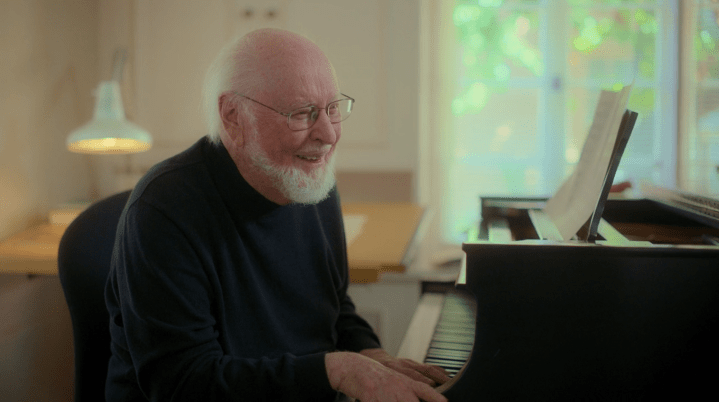
There are very few people who have had a bigger impact on Star Wars being successful than John Williams. It is no exaggeration to say that without John Williams, Star Wars would not be Star Wars.
He is the most successful composer in movie history, and his accomplishments are just staggering. He is the second-most nominated person in Academy Award history, behind only Walt Disney, with 54 career nominations for his body of work. He did the score for all nine Star Wars Skywalker Saga films, all five Indiana Jones films, the first three Harry Potter films, Jaws, Close Encounters of the Third Kind, E.T.: the Extra Terrestrial, Home Alone, Schindler’s List, Jurassic Park, and more.
His life, work, and legacy are the subject of a terrific new documentary that recently released on Disney+, Music by John Williams. The nearly two hour documentary was directed by Laurent Bouzereau and executive produced by a host of people: Steven Spielberg, Brian Grazer, Ron Howard, Darryl Frank, Justin Falvey, Sara Bernstein, Justin Wilkes, Meredith Kaulfers, Kathleen Kennedy, Frank Marshall, and Laurent Bouzereau.
Music by John Williams review

The documentary gave considerable attention to his most notable scores, but also told the story of his life and influences. It peeled back the curtain on John Williams the man, all the while exploring his musical genius. Featuring interviews from people like Steven Spielberg, George Lucas, J.J. Abrams, Ron Howard, Lawrence Kasdan, Kathy Kennedy, and more, the film does a great job at showing us how Williams works, what drives him, and an understanding of his career. It’s a great ride, with plenty of laughs and some tears too – and plenty of musical scores that will make you smile with fond nostalgia and deeper appreciation for one of the film industry’s greatest contributors.
I think it would be hard for me to convey just how terrific this documentary is, and it’s everything you would want or expect from a project like this. Williams is a legend, and this film is a worthy biographer. Any fan of Star Wars will love this, but so too will people who appreciate music, movies, and just human beings in general excelling at their craft. I couldn’t commend it any more highly.
“the secret sauce” of Star Wars
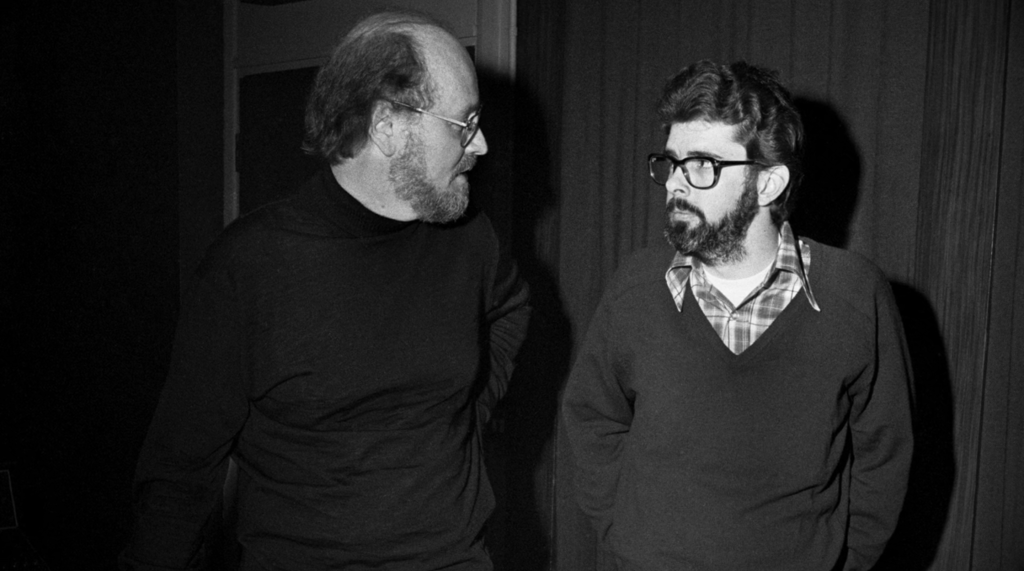
When Lucasfilm celebrated the 40th anniversary of A New Hope at Star Wars Celebration in 2017, John Williams made a surprise appearance to conduct a symphony through a few of his beloved hits. While there, George Lucas shared that John Williams was “the secret sauce” behind the franchise – and he’s absolutely right. Outside of Lucas, it could be argued that no one individual working on the productions has been as influential in making the franchise as iconic as it is.
Williams was hired by Lucas for the score of the film thanks in large part to their mutual friendship with Steven Spielberg, and Williams’s work on the original Star Wars (1977) movie became an instant hit. It became the best-selling movie score of all-time and won the Academy Award for best original score, and in more recent years has been named by the American Film Institute as the most memorable film score ever written. Williams returned for The Empire Strikes Back (1980) with some more iconic themes – like “The Imperial March”, “Yoda’s Theme”, and “Han Solo and the Princess” – and received another Academy Award nomination for best original score. He’d get a third nomination for his work on the franchise with Return of the Jedi (1983).
When George Lucas returned to making Star Wars films with the prequel trilogy, John Williams came back to the galaxy far, far away as well. In fact, Lucas said in this documentary that he probably wouldn’t have made the prequels if Williams wouldn’t have done the score, which is a big statement that reveals just how significant Williams’s music has been. He more than delivered with The Phantom Menace (1999), delivering one of his most iconic themes with “Duel of the Fates”. He returned for the sequels Attack of the Clones (2002) and Revenge of the Sith (2005) as well, but he was not done with Star Wars.
He returned for The Force Awakens in 2015, introducing a new generation of heroes with brand new iconic themes, most notably “Rey’s Theme” – which immediately joined the legendary lexicon of beloved Williams pieces. That was followed by sequels The Last Jedi (2017) and The Rise of Skywalker (2019), with Williams receiving Academy Award nominations for all three sequel trilogy scores. His soundtracks for all nine Star Wars films are all beloved, and they represent the most consistent and coherent connection between all the movies. It truly wouldn’t be Star Wars without John Williams.
Though he has not scored any of the anthology movies, Williams has stayed involved in the franchise. When Solo: A Star Wars Story (2018) was in the works, with John Powell attached to score it, Williams was approached to write a theme for Han Solo, something he had surprisingly not done before. That led to his terrific piece “The Adventures of Han”, which provided a theme of sorts for the movie that Powell utilized throughout. Then in 2019, Disney opened the Star Wars: Galaxy’s Edge theme park, and Williams actually scored a theme piece for the park – which won him his seventh Grammy Award for his work on Star Wars. Finally, in 2022, Williams wrote a theme for the character of Obi-Wan Kenobi (which, again, he had surprisingly never done) for the Obi-Wan Kenobi series on Disney+, which was adapted by William Ross to coincide with Natalie Holt’s score.
His work on Star Wars hasn’t been his only partnership with Lucasfilm, however, as his music for the Indiana Jones franchise has also provided some of the most iconic themes in movie history – most notably the “Raiders March”. Williams has provided the score for all five Indiana Jones movies – Raiders of the Lost Ark (1981), Temple of Doom (1984), The Last Crusade (1989), Kingdom of the Crystal Skull (2008), and Dial of Destiny (2024). He has received Academy Award nominations for best original score for four of them (all but Crystal Skull), won a Grammy Award for his score on Raiders, and won a Grammy for Best Instrumental Composition for “Helena’s Theme” in Dial of Destiny.
 Star Wars Thoughts