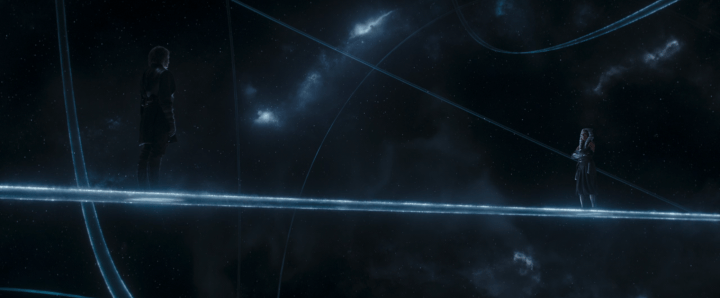
I said last week that the fourth episode of Ahsoka was my favorite live-action episode of Star Wars we’ve ever seen. Well, make that the second-favorite, because the fifth episode continued to soar to new heights.
It leans heavily into The Clone Wars, Rebels, and the prequel trilogy all while paying some thematic tributes to the original and sequel trilogies. But it’s undoubtedly intended as an unmistakable follow-up to the animated shows, which means that this episode might not land with the exact same effect for everyone, particularly those who haven’t seen those shows. And, while I think the series has done a good job softly ramping up to things like this, it’s also the case that those unfamiliar with Dave Filoni’s storytelling might be a bit surprised by how deeply into the spiritual and mystical side of the Force he gets.
But in the end, this episode is about Ahsoka Tano having to face the burdens of the past while learning to forge ahead into a new future. It’s a masterful hour of television, and it’s among my favorite hours of Star Wars period. Let’s dive into “Shadow Warrior”, but be warned that full spoilers are ahead!

Obviously the biggest spectacle in this episode was the return of Hayden Christensen as Anakin Skywalker, and it’s so great to see him back. He’s absolutely terrific here (hopefully redeeming some of the criticism unfairly levied at him for the prequels). The way he blends similarities to Matt Lanter’s voice during The Clone Wars with his own Anakin from the prequels is brilliant, and that extends beyond just the voice but also to the portrayal of a live-action Anakin during the Clone Wars. Seeing Anakin back in live-action in this role is an undeniable highlight. And he’s here, as he tells Ahsoka, to finish her training.
There will be a lot of questions people have about what’s going on and how Anakin is talking to her and where they’re at, and this episode doesn’t really dive into that all that much. But I think there are two takeaways that seem, at least to me, to be implied. (1) First, Ahsoka is in a sort of “netherworld” of the Force, in the balance between life and death. When she remembers her duel against Baylan, Anakin says it’s good – because it means she still has a chance to live. Whether she’s truly dead or not is ambiguous, but I think we’re definitely supposed to assume she’s very much hanging in the balance. And Anakin is here to help. That’s actually something similar to what he does later with Luke, as told in Shadow of the Sith: with Luke tormented with dark visions, there’s a moment where he’s mysteriously transported to Exegol and in danger – only for Anakin to show up and save him. (2) With that in mind, we don’t know exactly how Anakin is there, but I think it’s definitely Anakin. I don’t think it’s just a dream Ahsoka’s having, at least not in the sense we’d think of it, because Jacen hears their duel. This might not be happening physically, but it’s happening actually in the Force. And it’s Anakin who’s there, an Anakin who doesn’t remember the Siege of Mandalore but does remember hearing “I won’t fight you” before (which I think is a reference to Luke said the same to him aboard the second Death Star in Return of the Jedi).
But really, to get caught up in those questions isn’t the point. Dave Filoni has spoken before about how the World Between Worlds (if that’s even where Ahsoka) is mysterious and really will be different depending on what the person entering it needs to learn. The most important aspect isn’t how it’s all happening, but why. What does Ahsoka need to learn here? I’m not sure it was as directly clear as it could have been, and I’m guessing that ambiguity was a bit intentional (for better or worse). But I nonetheless think that, for those familiar with some of the deeper themes of the saga, the lessons begin to emerge a bit clearer.
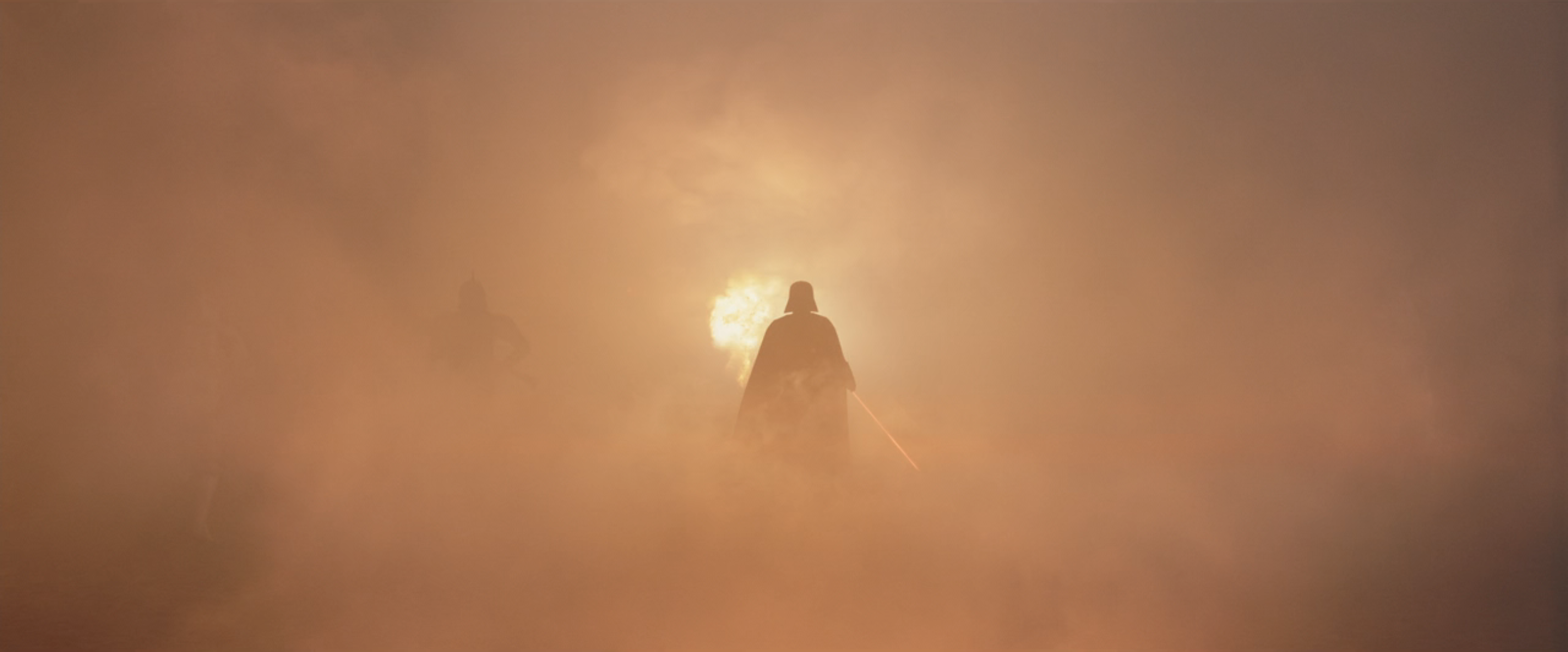
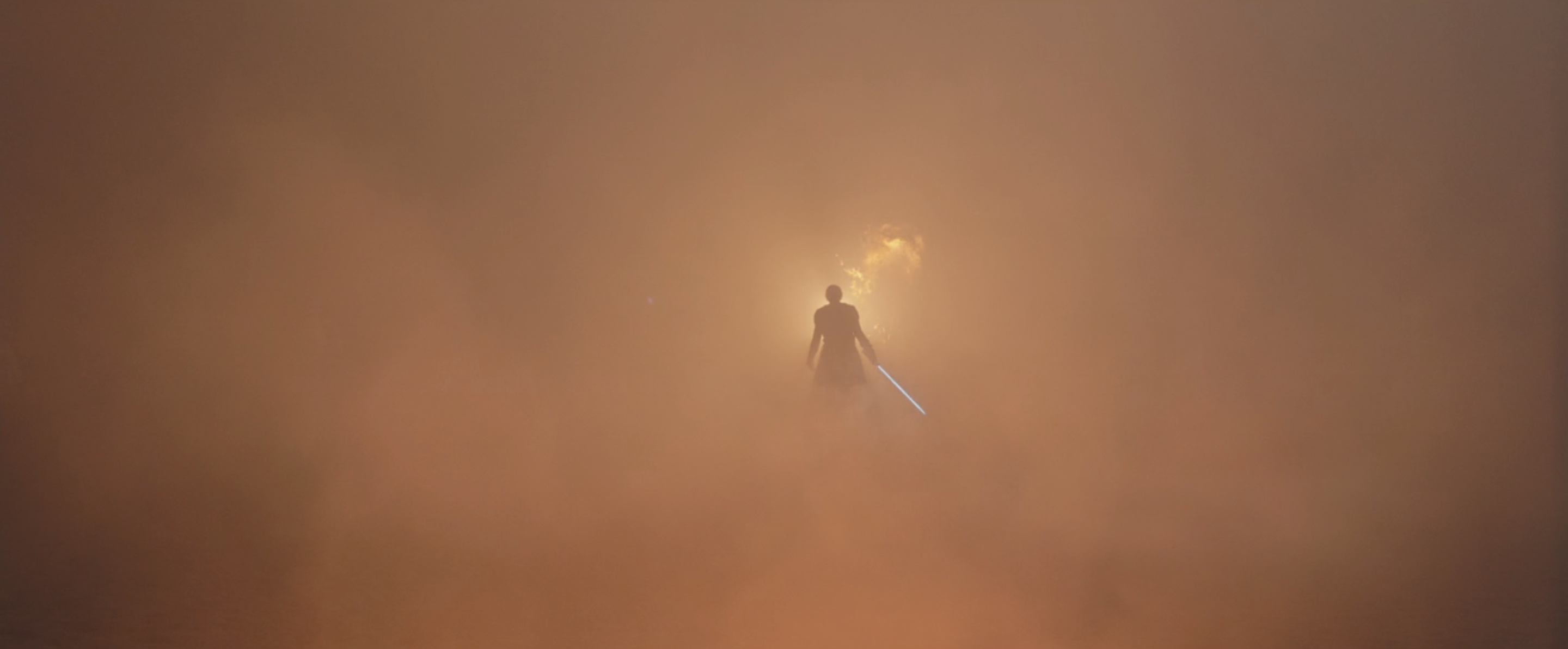


Ahsoka is scared. Again, it’s not directly stated, but it’s brought to a head in this episode and explains so much about her character arc since we last saw her in Rebels. Fans noted that this version of the character feels different – more stoic, less joyful, doesn’t smile, etc. – and I think that was absolutely intentional. Ahsoka is terrified of becoming like Anakin. That’s what plays out in these moments, and it plays out through her re-living moments from her past. It is absolutely thrilling to see these moments: Anakin in his Clone Wars armor, Captain/Commander Rex in live-action for the first time (voiced by Temuera Morrison), and the like. It’s still hard to believe we’ve got live-action Clone Wars like this, but it’s incredible to see.
First, Ahsoka re-lives the Battle of Ryloth, one of the earliest battles of the War and one of the first battles that she fought in with Anakin. Seeing Ariana Greenblatt here (who does a terrific job as a younger Ahsoka) is a reminder of just how young Ahsoka was during the Clone Wars. The Jedi took young teenagers and put them on the frontlines of a galactic war. The Jedi were supposed to be keepers of the peace, but they became soldiers – something Anakin flat out admits to her. But Ahsoka struggles with it, seeing the horrors of war and the dead soldiers she had led into battle. But Anakin tells her that if she doesn’t fight, she’ll die.
So what did she do? She became a great warrior – one who could command the pivotal Siege of Mandalore in the final days of the War, which we get to see in live-action here. Anakin mentions to her that he has no memory of it, and it’s because the battle was happening simultaneously to General Grievous’s attack on the Republic capital of Coruscant, with Anakin and Obi-Wan Kenobi rushing to save Chancellor Palpatine (as seen in the opening of Revenge of the Sith). All the while, Ahsoka commanded forces on Mandalore in an effort to capture Maul. Those wanting to see more of this can watch the final four episodes of The Clone Wars, which is among the best Star Wars has ever been. But what we see here is Ahsoka fighting against Maul’s Mandalorian forces, having become a mighty soldier on the battlefield. “You’re a warrior now, as I trained you to be,” Anakin tells her. “Is that all?” she scoffs back.

It’s all touching on one of the most important Star Wars themes: what truly makes a great Jedi? As the wise master Yoda once told Luke, “wars not make one great.” It’s easy to get fascinated with the impressive skills and fighting ability of the Jedi, but that’s not at the heart of who they are. And by trying to become warriors in the Clone War, they lost their way. In one sense, they had no choice – such was the brilliance of Palpatine’s plot. But in doing so they lost their way. Ahsoka was trained on the battlefield of war, where to not fight would have meant death, so she became a great fighter, trained by the Jedi Order’s greatest fighter. But is that all?
And it’s here where the main issue really comes up. Anakin tells her, “Ahsoka, within you will be everything I am.” To that, Ahsoka responds, “But my part of that legacy is one of death and war.” And this shows that something Baylan said to her during their duel has stuck with her, struck a nerve within her. He told her, “Your legacy, like your master’s, is one of death and destruction.” It seems that’s her deep fear, that he’s right. Is she anything more than that? How much like Anakin is she really? She fears becoming just like him, and Anakin here does nothing but stoke those fears by telling her that everything he is lives within her. This is a theme that is picked up on in The Rise of Skywalker, when Rey declares that she is all the Jedi; as Anakin says here, everything the master was is passed down to and lives within the apprentice. But what happens when that master succumbs to the darkness and leaves a wake of death and destruction in his path?
I think this is so much of what has caused Ahsoka to be reserved in training Sabine. She doesn’t want to train Sabine to be a warrior and be just like Anakin, yet Ahsoka has also become reserved and closed off from others. She didn’t train Grogu because of his attachment to Din Djarin. She left Sabine during her training. She hasn’t settled down anywhere but stays on the go in the galaxy. She’s more focused on stopping the threat than saving her friend. She’s stopped trusting herself and her instincts. Ahsoka was trained to be a warrior – something the Jedi were never meant to be – by the man who would become Darth Vader. Of course that would mess with her!
This journey for Ahsoka is much like Luke Skywalker’s journey in the dark side cave on Dagobah in The Empire Strikes Back, or Rey’s journey in the dark side cave on Ahch-To in The Last Jedi. Both of them were forced to confront their fears, but not something out there but something inside, a nagging fear that lurked within. So too Ahsoka here. Like I said earlier, the point isn’t so much where she is or how it’s all happening; it’s the fact that she’s having to face her inner demons, which have caused her to subtly lose sight of herself and what a Jedi really should be.

So what happens? Darth Vader returns. Dave Filoni has some absolutely stellar cinematography in this episode, particularly in the two spots where there’s a brief flash transition between Anakin and Vader. It’s masterful work. But we see Anakin with the red lightsaber and the Sith eyes, and he begins fighting Ahsoka again. This is what she fears most, that she’ll be just like him. She’s literally facing her greatest fear. Just like Luke in the cave faced the fact that the same darkness in Vader might lurk within him, so too does Ahsoka have to face the fear that she’s just like Anakin. Where does that lead her? As they fight Anakin tells her “time to die”, tapping into the refrain he’d been saying all along: her choice was to live or die. And it leads to Ahsoka holding Anakin’s red lightsaber up to his throat, poised to kill. This is the crescendo, the climax, and the question hangs in the air: will she embrace the darkness and strike him down? She’s holding a red saber, after all, and her eyes flash to look briefly like Sith eyes! But she refuses. She turns off the saber and throws it away, over the ledge.
All of this pays homage to the moment that I consider to be at the very heart of the saga and the most important in the whole franchise. At the climax of Return of the Jedi, Luke is faced with a temptation not all that different from Ahsoka here: to strike down Vader and, in doing so, embrace the darkness and take his place at Palpatine’s side. Instead, though, Luke deactivates his saber and throws it away, defiantly declaring, “I am a Jedi, like my father before me.” Ahsoka doesn’t say those words here, but she might as well have. Anakin has brought her to the very brink of her greatest fear, the fear that has kept her from embracing her present for fear of the past, and she has proves that she won’t embrace the same fate he did. It’s then that “light side” Anakin returns and, with a smile, tells Ahsoka, “there’s hope for you yet.” After this she finds herself in the water and emerges from it, a baptism of sorts, and she’s a different person.

The Ahsoka we once knew in The Clone Wars seems to be back. She’s far more playful, far more joyful, far more hopeful. She embraces the Jedi way not by fighting, but by reaching out through the Force and connecting with the purrgil – just like Ezra did in Rebels – and is willing to go wherever the Force leads her. She admits to Huyang that she has no idea where they’re heading, which is the moment it truly felt like Ahsoka was back but also felt like she’s opened herself up to trusting the Force and trusting herself in a way she wouldn’t have before this experience with Anakin. She’s not driven by fear, but by purpose. This is highlighted by the fact that she dons all-white robes, which as I’ve written before is a clear nod to Gandalf’s story in The Lord of the Rings. He wore gray robes, fought the Balrog, went through a death experience, and returned to Middle Earth with renewed purpose, wearing white robes. That’s Ahsoka’s journey. And by the end of the episode she’s not driven primarily by stopping Thrawn but by saving her friends. It’s no longer fear, but purpose, that motivates her. It’s no longer fear of self, but a willingness to trust herself and trust the Force to guide her, wherever it may lead.

For all the Anakin stuff (as wonderful as it was), it was the closing moments that I found as beautiful as anything in the episode. Kevin Kiner continues to absolutely shine with the musical score (what a home run hire that was!!), and as the purrgil prepare to jump to hyperspace we get a moving and swelling rendition of Ahsoka’s theme. Ahsoka promise Hera that she’ll find Sabine and Ezra – which echoes the end of Empire – and Hera tells her “may the Force be with you” before the purrgil jump to hyperspace. This episode is everything Star Wars should be, full of epic action, emotional stakes, deep storylines, and filled with hope throughout. See, nothing really changed in terms of the threat facing the galaxy, yet this episode ends on a profoundly hopeful note. Why? Because Ahsoka has embraced her Jedi past and moved on from the chains that bound her, and she’s coming for her friends. “We are what they grow beyond,” Yoda told Luke. “That is the true burden of all masters.” Ahsoka has learned to grow beyond Anakin, and that was his final lesson for her.
This episode was fantastic. As an avid fan of The Clone Wars and Rebels, this was a dream come true. And I can’t wait to see where the show goes from here.
I’ve spent a lot of time discussing Ahsoka’s journey, so let me just highlight some bullet-points of other things about the episode:
- I loved seeing Jacen Syndulla’s role in this episode. He’s had a bigger role than I thought he would, but I’m so glad for it. It was awesome seeing how he could sense and hear the lightsaber fight going on in the ocean, and I also liked how Hera was willing to listen to him. It’s a contrast to the New Republic’s approach to her, as they aren’t willing to listen and trust. Hera, though, is willing to trust Jacen and listen – and this causes her to jump into action. It was such a great decision to have Jacen be the one to help save Ahsoka – and we finally got a name-drop of Kanan Jarrus too, which made it even better. About time!
- I love that Hera could hear the lightsabers in the ocean, too. This fits into a theme the series has been exploring so far with Sabine, as the Force flows through all living beings. It comes more easily for some – like Jacen – but for anyone willing to focus and work at it, it’s there.
- I was also thrilled to hear Leia Organa mentioned. It was a brief reference, so you’d be forgiven for mentioning it, but Carson Teva tells Hera that Senator Organa can only cover for them so long. That’s a small line, but it’s a great development: Leia, a New Republic Senator, is helping to stall Mon Mothma and the New Republic from coming after Hera so quickly. I don’t know if we’ll actually see her in this series or not (though I could see her advocating for Hera in front of the security council), but in this whole Thrawn saga that’s unfolding I’d be shocked if Leia, Luke, and Han don’t play a role. It’s too big of a story for them to be out of it entirely. And I like how this is a small nod to how, even if they aren’t on the front lines of the fight, these heroes are still in the galaxy fighting for good.
- When Ahsoka used the Force to sense what happened with Sabine, she used a skill known as Psychometry, which we’ve most notably seen Cal Kestis use in the Star Wars Jedi games. It’s an ability to learn information about a past event through an object, and Ahsoka puts it to use here (we saw her use it on Lothal earlier in episode 2, as well).
- As I mentioned earlier, we see Rex show up both at Ryloth and Mandalore. He’s a major character in The Clone Wars and one of Ahsoka’s closest allies and friends. He was the clone captain of the 501st Legion under Anakin’s command, and he later served as the clone commander for the Siege of Mandalore. Years later he’d join the Rebellion and fight against the Empire in the Galactic Civil War, including fighting at the Battle of Endor. This is the first time we’ve seen the clone captain in live-action, however, and it’s amazing. He’s a fan-favorite, and though his inclusion here is brief and his role minor, I’m so glad he was included.

 Star Wars Thoughts