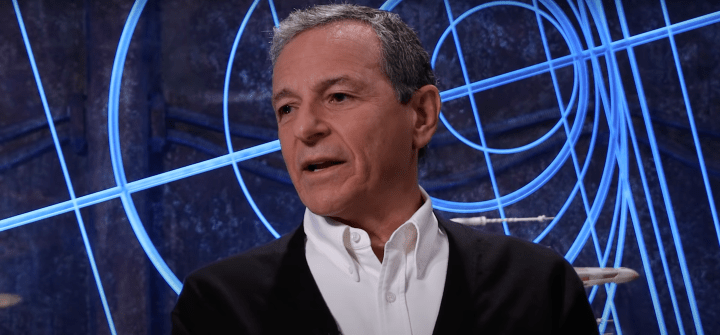
If you follow Hollywood and the movie industry, you’ve no doubt seen some comments from Disney CEO Bob Iger in recent days that have stirred conversation. The comments I want to focus on today are those he made in a recent CNBC interview about Disney’s current lull and what the studio is doing about it.
In short, the headlines have all been about how Iger says they need to pull back on content from Marvel and Star Wars (I recognize I’m guilty of that very thing with this article, too). That’s true, but I think considering the comments in the context of the full interview (which you can view here) paint a slightly different picture than those headlines might suggest.
The interviewer first asked about Pixar’s recent disappointments and whether the loss of John Lasseter was a factor. Iger in many ways dodged the question to discuss the whole Walt Disney Studio output. Here’s what he said:
“Well first of all, the studio and its movie assets are number one at the global box office this year, so far. That said, we’re extremely realistic and I’m very objective about that business and there have been some disappointments. We would have liked some of our more recent releases to have performed better. It’s reflective not as a problem from a personnel perspective, but I think in our zeal to basically grow our content significantly to serve mostly our streaming offerings, we ended up taxing our people, in terms of their time and their focus, way beyond where they had been. Marvel is a great example of that. They had not been in the TV business at any significant level. Not only did they increase their movie output, but they ended up making a number of television series, and frankly it diluted focus and attention. And that is, I think, more the cause than anything else.”
You’ll notice, very importantly, that there is nothing about Star Wars in there. Iger was asked about Pixar in general, responded in a way that represented the whole filmmaking side of the company, and then used Marvel as his prime example. It’s also important to realize that this is not the first time we’ve heard Iger say things like this. Since his return as CEO late last year he’s been clear: Disney is going to lean all the more heavily into their established brands, like Marvel, Star Wars, and Pixar, but they’re also going to focus on saving money and focusing on quality over quantity.
It has also been Marvel that he’s used as his clear example of the potential need to pull back on quantity in recent months. He has previously been on record about learning the same thing with Star Wars, but that was back in 2018 with the release of Solo: A Star Wars Story. Iger has repeatedly said publicly that the movie’s box office disappointment made them re-consider the theatrical Star Wars releases, but more recently the focus has been on picking the pace back up, not slowing it down. Marvel right now is in the opposite place, and it looks like a slowdown with that franchise will be coming.
From there in this CNBC interview Iger was asked a follow-up question about Pixar, and part of his answer was to give a reason why the movies might have struggled at the box office recently:
“Yes, there were three Pixar releases in a row that went direct to streaming, mostly because of Covid, and I think that may have created an expectation in the audience that they’re going to eventually be on streaming, and probably quickly, and there wasn’t an urgency. And then I think you’d have to agree that there were some creative misses as well. …”
Iger’s comments are something that Pixar chief creative officer Pete Docter said recently too, that by releasing the movies straight to Disney+ during the pandemic they trained their audience to expect it and get used to it, which has hurt them now as they try to bring the movies back to the big screen. It’s a problem that’s far larger than Pixar, and frankly far larger than Disney too, as the entire industry tries to navigate the uncertain post-pandemic waters. Previously, there was a time where if you didn’t see a movie in theaters you’d be waiting months, after which point you’d still have to pay money to purchase (or rent) the movie in order to watch it. Now, even movies that are released in theaters wind up on the accompanying streaming service not long after. How do you get those audiences back in theaters? That’s what studios are trying to figure out.
And it was then, after this context, that the interviewer asked Iger a follow-up question: “Marvel and Star Wars, too much? I mean you almost indicated it’s been a little much. Do you pull back in a way?” To that, Iger’s response was simple and succinct:
“Yes. Yeah, you pull back, not just to focus but it’s also part of our cost containment initiative. Spending less on what we make, and making less.”
A few things must be said about this. First, it is obvious that Iger is affirming that Star Wars will be a part of the company-wide focus to make less content, to do it cheaper, and to focus on quality in doing it. But second, I think it’s also important to realize that in this entire interview Iger never once even mentioned Star Wars, never brought it up on his own. The only time it was brought up was by the interviewer, who grouped it in with Marvel. Iger obviously responded to it, but the clear takeaway here is that Iger views Marvel as the prime example of the studio’s slowdown.
What all of this means for Star Wars moving forward remains to be seen, but like I’ve already mentioned, they might be a bit ahead of Marvel in sorting these matters out after the last few years. They’re now ramping up toward their theatrical return but have slowed and been careful and meticulous. Their shows have carried them (and Disney+ in general), but Lucasfilm has already thought a lot about pacing their stuff. Where they’ll really be focused, I’d guess, is on the financial side. They’re not churning out the same amount of content as Marvel, but their content is still costing as much as Marvel. An example of this is the recent Indiana Jones and the Dial of Destiny. It’s been a box office disappointment, but a large reason why is because of the exorbitant budget that essentially put a successful box office run out of the picture from the start no matter what.
Times are changing, and movie studios are having to try to sort it all out. The future is uncertain, but Bob Iger’s mandate is clear: Disney will be leaning into these tentpole franchises, but doing so with more caution, quality, and frugality in the process.
 Star Wars Thoughts