When The Empire Strikes Back was released in 1980, it contained the biggest twist in all of film history: that Luke Skywalker’s father was actually Darth Vader. So when it came time for the sequel three years later, Return of the Jedi faced an impossible task of matching it. And while no one would claim that the latter twist was equal with the prior one, it was no less shocking: Luke Skywalker and Leia Organa are siblings!
It’s a moment that really seems to come out of nowhere, except for a line that Yoda utters in Empire to Obi-Wan: “there is another.” It so much comes out of nowhere that in Empire Luke and Leia actually kissed (which should all be a reminder to those who claim that the biggest secret to making a cohesive trilogy is a big overall plan… because George Lucas didn’t have it all mapped out). But then in Jedi Ben explains to Luke that he and his sister were hidden from the Empire, and from each other, in order to keep them safe.
Quite frankly, the reveal could easily have backfired, even more than the “dad Vader” one (as Mark Hamill would say). It could have felt unearned, out of nowhere, and controversial. But it works, and a large part of why it works so well is the material that has come since then.
With the reveal that Leia was not only a Skywalker but was also Force sensitive, Legends material jumped all over that and introduced Leia training to be a Jedi, and alongside her brother helped to bring in not just the New Republic but also a New Jedi Order. Their relationship was really fleshed out all the more, and it made it so that them being siblings became thrilling rather than confusing.
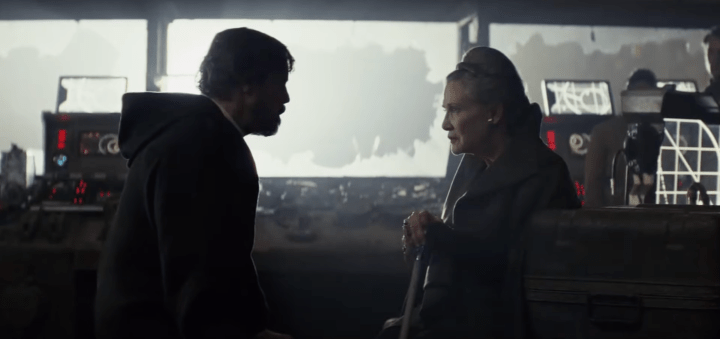
Then the sequel trilogy came out, and from even the trailers for The Force Awakens it leaned into this dynamic. Leia searches for her brother, and then in The Last Jedi they meet again. They share a touching reunion, complete with John Williams reprising the music from their meeting in Return of the Jedi, and one major reason why the scene works so well and is one of the most emotionally compelling in the entire saga is because it’s a scene between brother and sister, between friends, between people who have loved and lost so much. Then The Rise of Skywalker sees Leia in the role of Jedi Master to Rey after Luke’s death, and Leia then becomes one with the Force – after which we learn that she did briefly train with Luke in the ways of the Jedi. And at the end of the movie, Luke and Leia stand together, having reunited once more in the Force.
In other words, these subsequent stories have done far more than just tell some interesting and exciting tales, but have also made Luke and Leia’s bond all the more beloved. To see how their relationship played out beyond Return of the Jedi makes the decision in Jedi worth it all, no matter how it could have initially been received. And all of this is nothing new for the franchise, which has always used the movies as the pillar but has long relied on other material to bolster it. The most prominent and significant example is to look at how The Clone Wars helped the fan perception of the prequel trilogy, adding further depth to the characters in-between Attack of the Clones and Revenge of the Sith, particularly with Anakin Skywalker. For as long as Star Wars is around that will continue to happen, and soon we’ll be getting more and more stories that help add depth to the sequel trilogy too (like in Adam Christopher’s excellent book Shadow of the Sith, for example).
Because, for as beloved as Luke and Leia’s relationship as brother and sister is now, we have the expanded universe and sequel trilogy to thank for making it feel not just natural, but emotional and thrilling. Which in a franchise format like this works perfectly fine.
 Star Wars Thoughts